50 Years of Building Communities
Beginning in 1970, Bill Cummings had a vision for creating places where businesses could grow and prosper, and for supporting the organizations that contribute to a vibrant community. Today, the Cummings Properties portfolio has grown to 11 million square feet of commercial real estate in 12 cities and towns north of Boston.
In keeping with this sense of community, the majority of Cummings Properties' buildings were donated many years ago to Cummings Foundation by Bill and Joyce Cummings. These buildings are operated for the sole benefit of the Foundation, which has awarded nearly $600 million in grants to local area nonprofits.
Company History
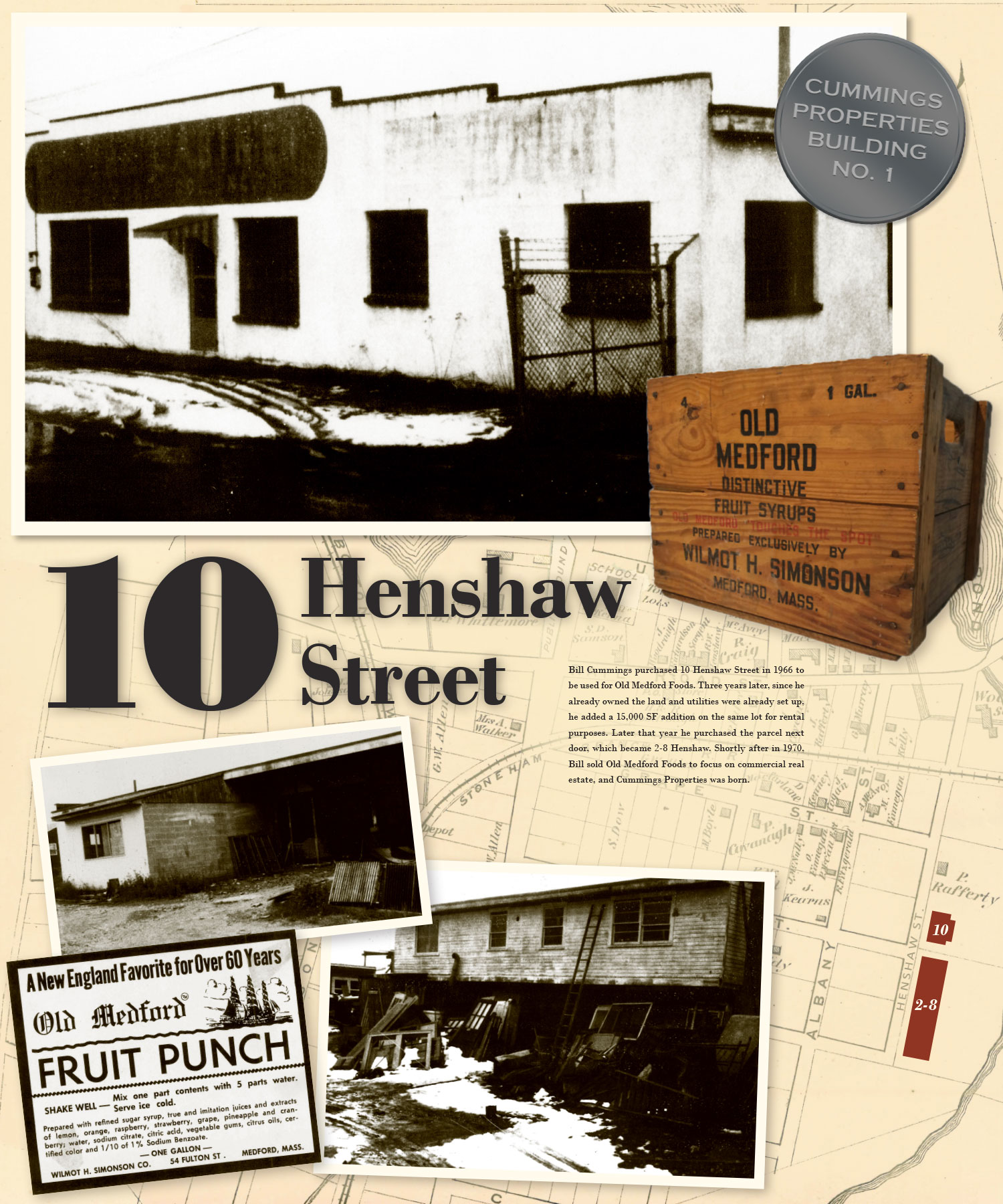
1970 - The Beginning
Bill Cummings establishes Cummings Properties, headquartered in Woburn, MA. At the time, it was known as Cummings Industrial Centers, Inc.
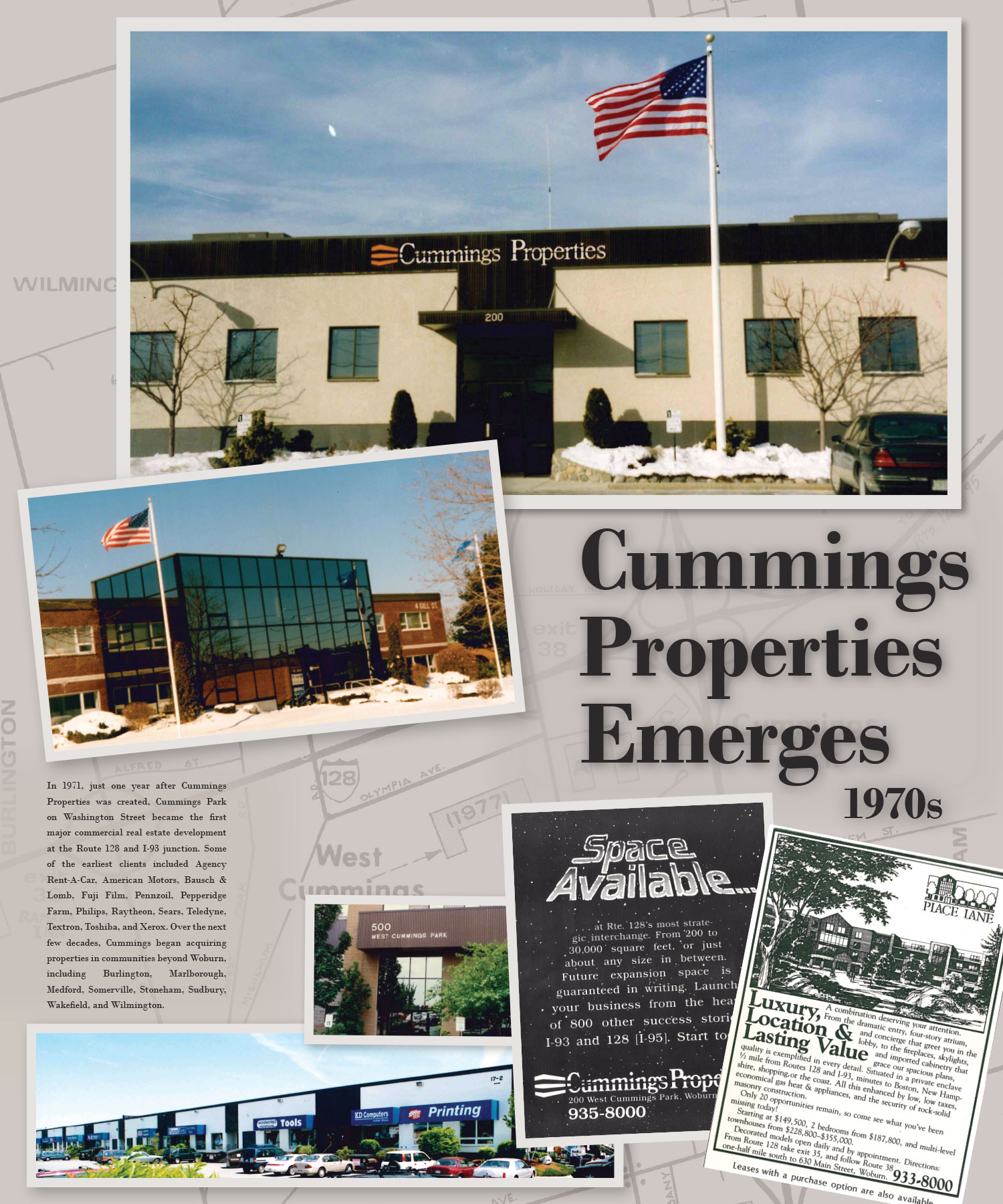
1971 - Development at a Major Crossroads
Cummings Properties develops Cummings Park on Washington Street in Woburn, making it the first major commercial real estate development at the junction of Route 128 (I-95) and I-93.

1979 - Scaling Up
Tower Office Park, located at the intersection of Route 128 (I-95) and I-93, opens as the firm's first mid-rise office building.
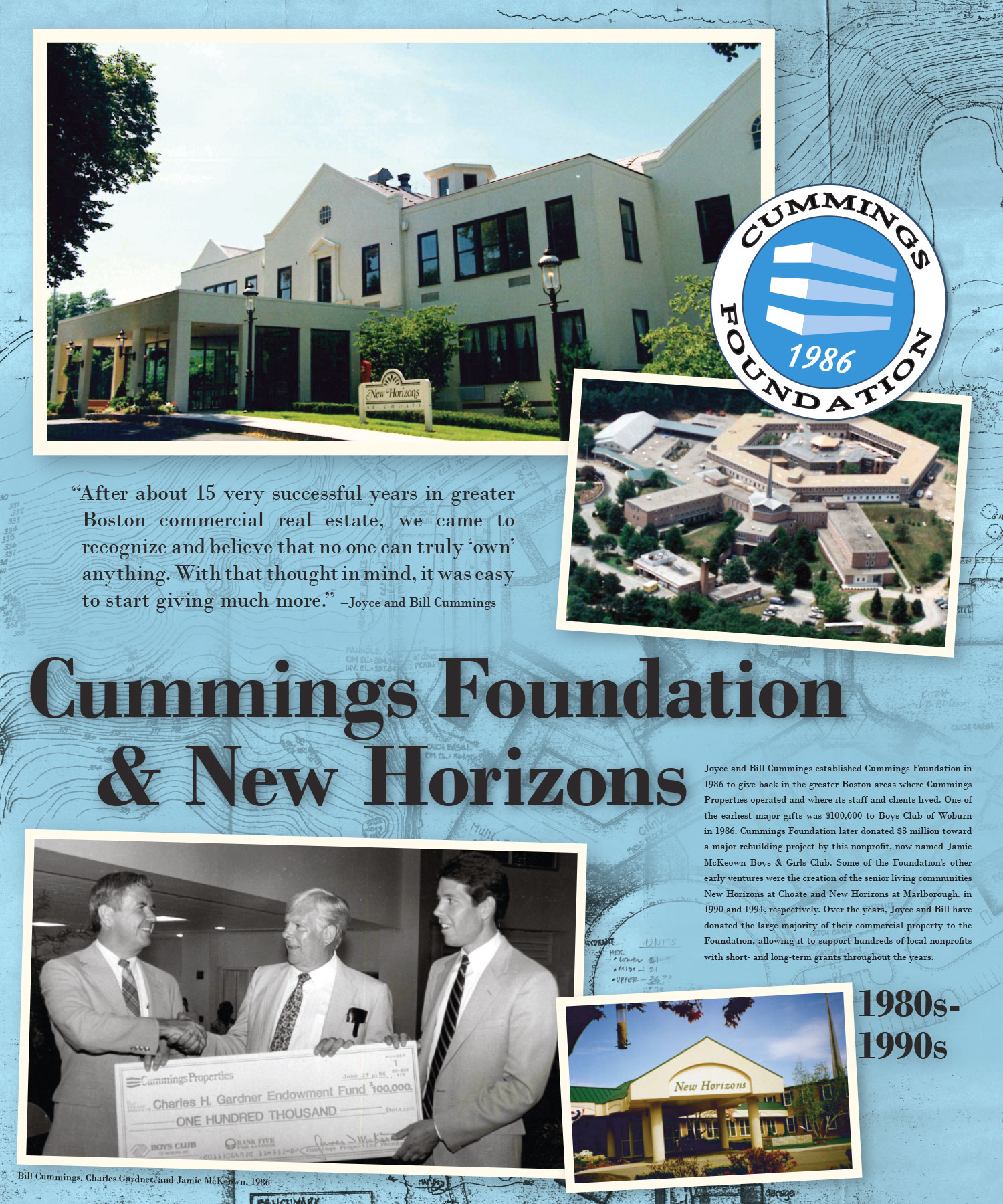
1986 - A Foundation for Local Giving
Bill and Joyce Cummings establish Cummings Foundation, a grant-making entity with a focus on local giving. This same year, Cummings Properties builds the 150-unit Place Lane Condominiums in Woburn.
1989 - Regional Expansion
Cummings Properties begins acquiring properties in communities beyond Woburn, including Burlington, Marlborough, Medford, Somerville, Stoneham, Sudbury, Wakefield, and Wilmington.

1990 - A Move Into Senior Living
Cummings Foundation renovates the former Choate Memorial Hospital, creating—and welcoming the first residents to—New Horizons at Choate, a not-for-profit assisted and independent living community.

1991 - A Community Voice
Bill Cummings establishes Community Newspapers, Inc., which publishes the first editions of Woburn Advocate, Winchester Town Crier, and Stoneham Sun. Dennis Clarke is named general manager of Community Newspapers.

1994 - New Horizons Grows
Bill and Joyce Cummings establish New Horizons at Marlborough retirement community at the former Madonna Hall School for Girls.

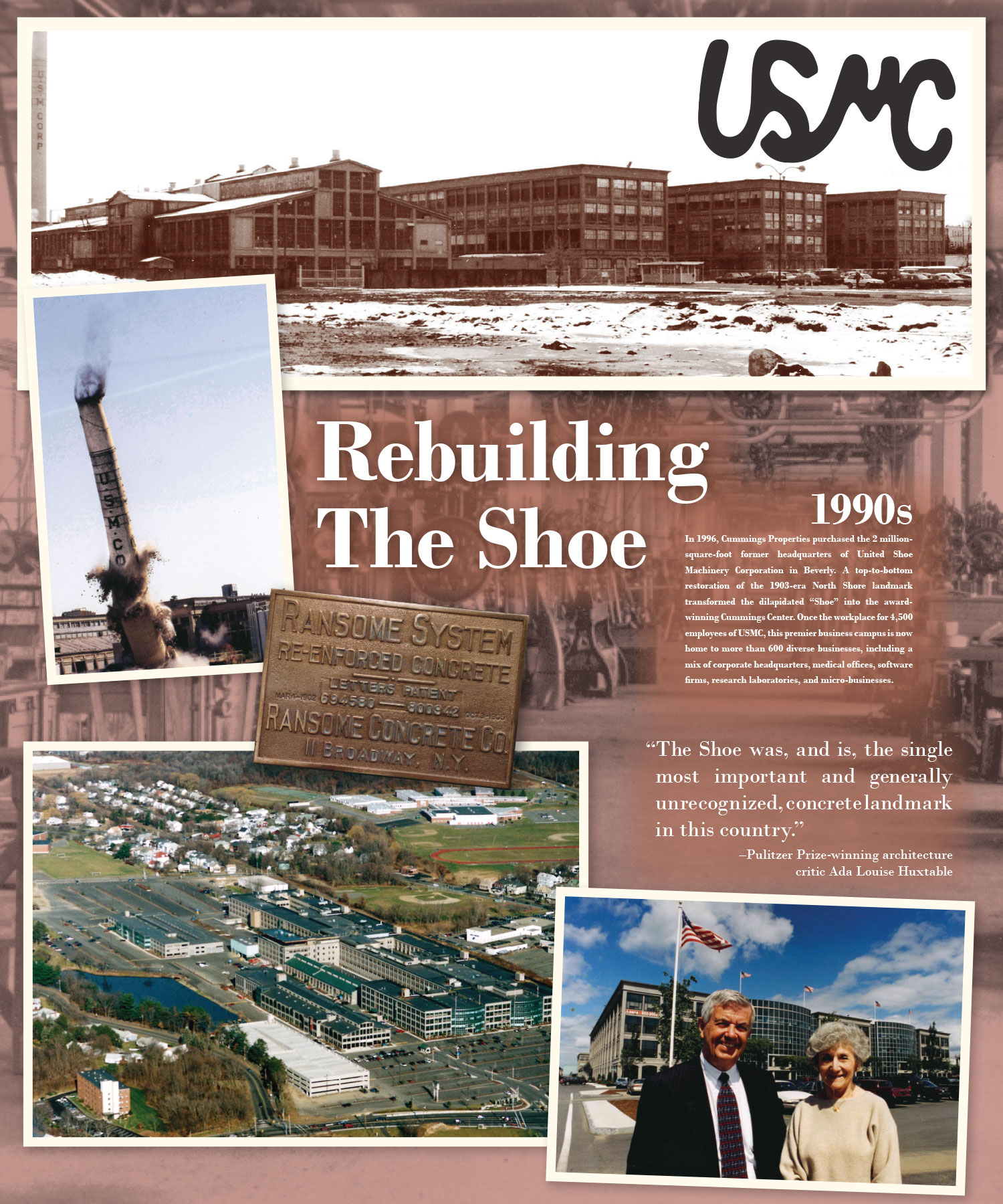
1996 - Transforming a Landmark Property
Cummings Properties purchases the 2 million-square-foot former headquarters of United Shoe Machinery Corporation in Beverly. The firm begins a top-to-bottom restoration of the 1903-era North Shore landmark, and transforms the dilapidated "Shoe" into the award-winning Cummings Center.

1997 - Design Accolades
Cummings Center is the subject of a Wall Street Journal feature story by Pulitzer Prize-winning architecture critic Ada Louise Huxtable, and is hailed as "the single most important concrete landmark in this country."

1998 - Honors for an Entrepreneur
Bill Cummings is named Real Estate Entrepreneur of the Year for New England by Ernst & Young.
1999 - New Leadership
In September, Dennis Clarke and Michael Pascavage assume the co-presidency of Cummings Properties, succeeding the late Jamie McKeown. In 2004, Dennis Clarke is named president and CEO of Cummings Properties.

2007 - National Recognition
Buildings Magazine names Cummings Properties among the top 25 commercial real estate organizations to watch in the United States.
2008 - A Flagship is Born
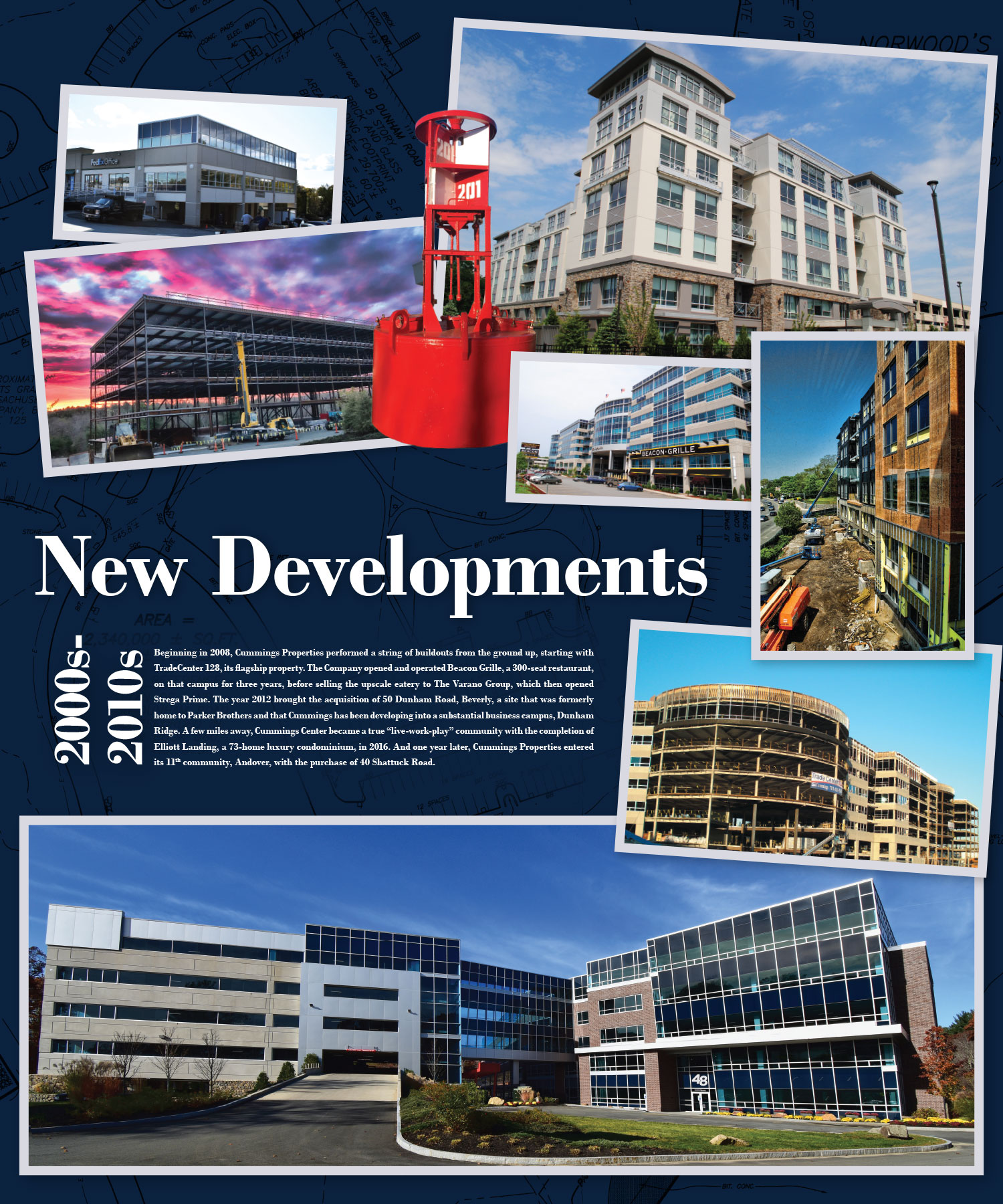
Cummings Properties opens the newly constructed TradeCenter 128 on the site of the original Northeast Trade Center in Woburn. The highly visible campus, which includes a 550,000-square-foot first-class office building and Middlesex County Superior Court, directly fronts Route 128/Interstate 95, also known as America's Technology Highway. In 2010, TradeCenter 128 is named Real Estate Project of the Year by Boston/SF News.

2009 - Early Adoption of Shared Work Space
Cummings Executive Suites opens at TradeCenter 128, offering ready-to-use office and conference space for rent by the day, week, or month. What began with 12 offices had expanded by 2012 to more than 240 offices across three Cummings locations.
2011 - Investing in Future Generations
Long committed to sustainability, Cummings Properties earns Energy Star awards for 18 Commerce Way in Woburn and 500 Cummings Center in Beverly. A total of 10 Cummings buildings have earned the Energy Star distinction by meeting or exceeding the EPA's rigorous standards.
Joyce and Bill Cummings join The Giving Pledge, a campaign founded by Warren Buffett and Bill and Melinda Gates to encourage philanthropy among the world's wealthiest individuals.

2012 - Growth on the North Shore
Cummings Properties acquires 50 Dunham Road in Beverly, one of the few remaining large, highly visible sites directly fronting Route 128. This building was once the world headquarters of Parker Brothers, maker of Monopoly.

2013 - Employees Shape Community Giving
Following a successful pilot run in 2012, Cummings Properties launches its annual Cummings Community Giving program, wherein staff members are each invited to direct a $1,000 donation from the Company to the local nonprofit of their choosing.
2015 - Supporting Our Armed Forces
The United States Department of Defense recognizes Cummings Properties for being a Patriotic Employer, supporting its staff members who serve in the armed forces.
2016 - Building Communities
Cummings Center becomes a true "live-work-play" community with the opening of Elliott Landing, a 73-home luxury condominium complex.
Boston Business Journal names the Cummings organization the Top Corporate Charitable Contributor in Massachusetts.

2017 - Expansion to Andover
Cummings Properties expands into its 11th community, Andover, with the acquisition of 40 Shattuck Road.
2018 - Next Phase of Leadership
Eric Anderson is named Cummings Properties’ fourth president. His predecessor, Dennis Clarke, assumes the role of chairman and CEO.
Bill Cummings releases his self-written memoir, Starting Small and Making It Big, and embarks on a book tour to dozens of top universities.
With $34.5 million in charitable donations, the Cummings organization is named Massachusetts’ Top Corporate Charitable Contributor by Boston Business Journal for the third year in a row.

2019 - New Developments at Dunham Ridge
Cummings Properties completes 48 Dunham Ridge, a 160,000-square-foot Class A building, and begins work on 51 Dunham Ridge, a 154,000-square-foot mixed use property.
Harvard Business School publishes "Bill Cummings: The Cummings Way," a case study on the Cummings organization.
2020 - Rising to the Challenge
Cummings Properties celebrates 50 years of building communities. The organization redoubles its efforts to support local economies during the global pandemic by providing emergency relief funding through Cummings Foundation, keeping its buildings operational for the many essential businesses it serves, and developing new properties on spec to accommodate the suburban “COVID tech boom.”
2021 - Hope, Rebirth, and Emergence
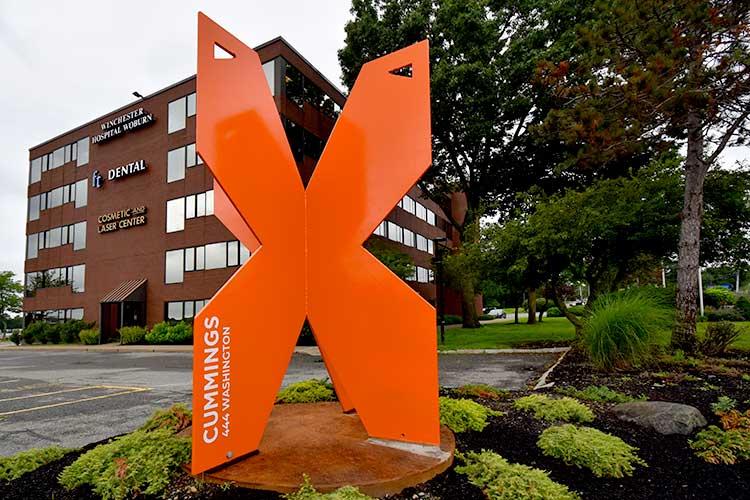
To convey hope as Massachusetts begins to emerge from the pandemic, Cummings designs, constructs, and installs 22 largescale “Iron Butterfly” sculptures at various properties associated with the organization. By pivoting to focus on meeting the high demand for lab space, the Company not only regains but surpasses pre-pandemic occupancy levels.
2022 - Big News in Beverly
The construction of a multi-phase Emerging Tech Center @ Dunham Ridge brings new turn-key incubator labs and a collaborative setting to the North Shore’s thriving life sciences community.
Cummings Center garners global attention when Shoebert the Seal makes the expansive business campus his home away from home.

2026 – The Next Stage of Growth
During a public auction for a long-vacant office and research center in Bedford, Cummings Properties submits the winning bid for 174 and 176 Middlesex Turnpike. Its acquisition of the 330,000 SF Bedford Woods complex marks the Company’s expansion to a 12th suburban community.
Cummings completes construction on Beverly Landing, bringing 60 brand-new luxury condominiums to the far north end of the award-winning Cummings Center mixed-use campus.

Be part of our future!
- See our new developments and available space
- Join our friendly, talented team