ECONOMIC OPPORTUNITY AREA

TENANT BENEFITS


On December 30, 1996, the Massachusetts Economic Assistance Coordinating Council (EACC) officially designated Cummings Center as the Cummings Center Economic Opportunity Area (CCEOA). The purpose of the EACC is to administer the state's Economic Development Incentive Program so as to promote economic development in Beverly and other selected communities. Then-Governor Weld earlier described the potential of Cummings Center as a "huge economic engine" for Boston.
 
Cummings Center Economic Opportunity Area
 
 
Established by Massachusetts' Economic Assistance Coordinating Council on December 30, 1996, the Cummings Center Economic Opportunity Area (CCEOA) offers many benefits. The most significant direct benefits, however, are to the city of Beverly, to the owners of Cummings Center, and to the almost 400 client firms that now lease space there. Indeed, the ability to set lower rental rates because of lower taxes has been one of the major factors in attracting so many new businesses to relocate to Beverly and to historic Cummings Center.
 
The Cummings organization took over the former Beverly, MA headquarters of United Shoe Machinery Corp. on April 28, 1996. Vast stretches of that huge concrete factory and foundry were dilapidated, ghostly silent and cold. The heated portions, on the other hand, gulped enormous amounts of energy, while the owners tried to give the property at least the appearance of viability. Meanwhile, The Black & Decker Corporation continued to lose millions on the property each year.
 
 
Nothing was being accomplished to maintain the rapidly deteriorating property. The once largest concrete building in the world suffered active neglect for at least a decade and a half, and was the source of much consternation in the city it had nurtured so well for most of the century. FORTUNE Magazine described it as "massive and antique" in October 1972.
 
Cummings Properties' late president, James McKeown, and chairman, Bill Cummings, first saw the complex in November 1994. Almost immediately they offered to purchase the entire 80-acre complex for $500,000 through Boston broker Robert Cronin, now of Meredith & Grew. It was a full year later, however, before the offer was finally accepted. Then began an $84 million restoration and rebuilding of more than 2 million square feet of the Boston area's finest mixed use office, research, laboratory complex.
 
 
With that offer on the table, the owners reportedly looked for any other offer they could find, from any of the dozens of other prospective buyers who earlier looked at it when the asking price was down to $35 million. There were no other takers, however, even at a giveaway price, and the deal was closed with Cummings Properties. At that point, the property was assessed by the city at $6.2 million, and significant tax abatements would certainly have followed.
 

Rather than deal with tax reductions, however, Beverly officials instead pushed for a major rebuilding of the huge complex. They used a state TIF (Tax Increment Financing) agreement as the carrot, convincing Cummings Properties that a large private investment in the sprawling historic landmark really might make sense.

As a result, instead of spending $5 million or so in a "Band-Aid" approach, Cummings Properties committed to the city, and the state, to spend a minimum of $16 million. Although it agreed to do a great deal more than just correct code violations and repair the roofs of the 95-year-old complex. Cummings had no concept even of how far it would go to create the extraordinary ultra modern office, research and laboratory campus which resulted.

Clearly, the initial $500,000 investment was not the risk that concerned Cummings Properties (and all other prospective buyers). It was the risk of all the additional money that then started to flow.


Click to enlarge
 

The Wall Street Journal on October 2, 1997 wrote, "Because the risk-reward factor of this [USM] conversion was enormous, it was no undertaking for the fainthearted. Mr. Cummings has an appetite for challenges. A successful operator of renovated old properties, he has demonstrated a kind of vision and investment savvy conspicuously absent among the owners of similar structures, where serious problems of age, size and condition stand in the way of profitable reuse."

There were some environmental risks at United Shoe that have since been fully corrected, but more significantly, there were huge economic risks as well. No new tenants whatsoever were lined up to occupy the soon-to-be restored building, and many if not most of the small manufacturers, woodworkers, and machine shops that came with the purchase were sometimes more of a liability than an asset, if a restoration was to be completed.

If Cummings Properties did make a large speculative investment to clean up and rebuild the property as an office and research facility, how many new tenants would come?


As it turns out, hundreds of new tenants have come, following lots of good local and even national publicity, as well as extensive advertising. City officials worked very hard with the Cummings professional staff in resolving all outstanding code and safety issues, and things really started humming. More and more money was needed as more and more sophisticated efforts were undertaken to preserve and improve the historic complex.
 
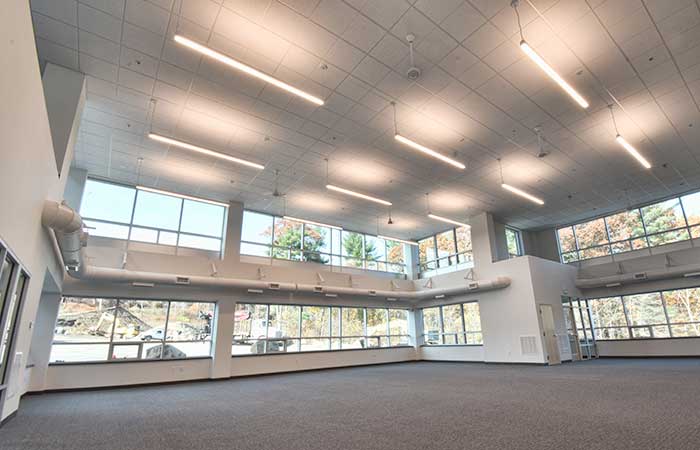
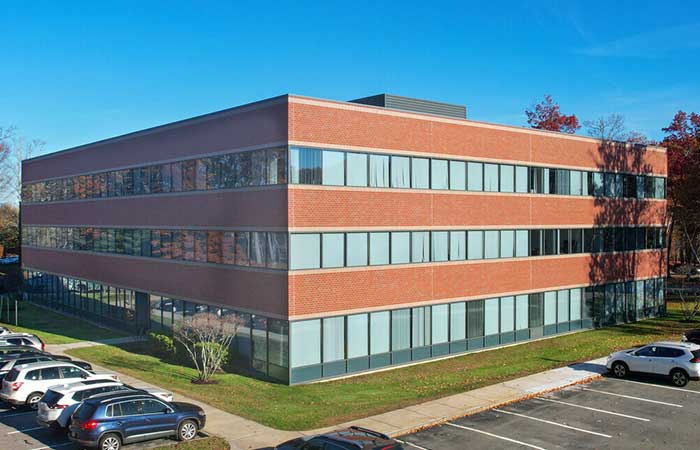
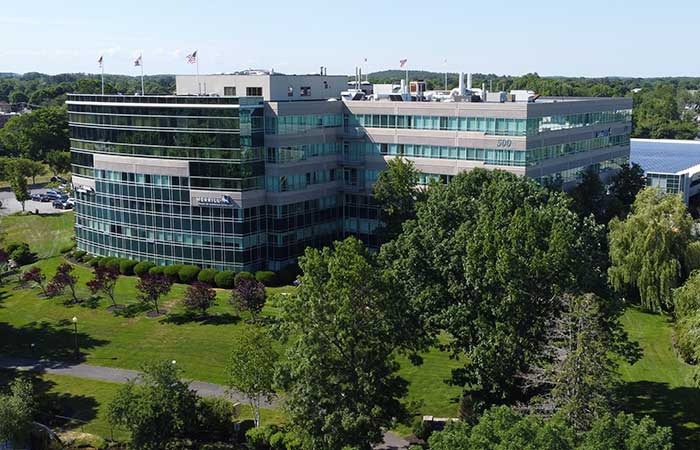
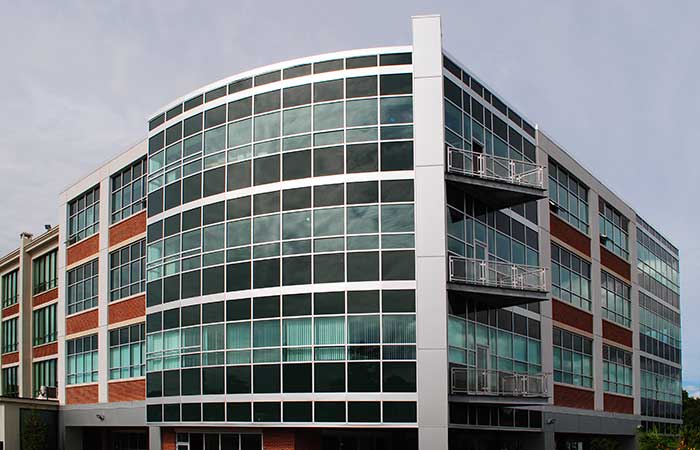
Tenant buildouts were the largest factor, along with two brand new glass curtain wall additions on the south side. These were to signal to the world that things had, indeed, changed. On the north side, a mountain of granite ledge was blasted away to make new parking areas, while acres of new landscaping were created on all sides, including hundreds of new trees. The spectacular water view below is from an available suite on the fourth floor of 500 Cummings Center.
 
 
By January 1, 2002 the investment catapulted from the original commitment of $16 million to more than $60 million. About a third of this figure is attributable to all of the site and infrastructure improvements, while the balance is for actual construction work at the property. After a total investment of $80 million, to date, Cummings Center is now home to approximately 400 office, medical and research firms of all sorts.
 
The Commonwealth has aggressively promoted the Beverly program to area businesses, with several on-site seminars by state officials. Many Cummings Center tenant firms have availed themselves of the individual benefits, with abundant help from Beverly's economic development office (781-921-9000). Bill Cummings has often lauded both state economic development officials and all Beverly officials for their remarkably strong cooperation.
 
 
Then-Massachusetts Secretary of Economic Development, David A. Tibbetts, wrote warmly of Cummings Properties' conversion of the United Shoe complex on August 3, 1998. "The Shoe is one of the Economic Development Incentive Program's premier success stories. Your efforts will continue to make a tremendous and lasting difference for the North Shore and the Commonwealth." He concluded, "The Shoe is an extraordinary accomplishment, and I have every confidence there are many more to come."


On November 6, 1997 in a special editorial entitled "Breathing life into old factories," The Salem Evening News said: "There is no doubt in our minds that any public funds that might be invested in these projects... or the tax incentives that were granted Cummings, will be returned many times over."

On February 10, 1999 Bill Cummings spoke at a joint meeting of the Boston District Council of the Urban Land Institute and Greater Boston Chamber of Commerce. "Because of the designation as a Massachusetts Economic Opportunity Area, and the related TIF agreement," he said, "Cummings Properties made four times the investment in Beverly that it would otherwise have made... And today both we and the city have 10 times the building as a result."


Cummings Center is a member of the Massachusetts Association of Business Incubators.

As a result of the CCEOA designation, all businesses that locate at Cummings Center are now eligible for designation by the EACC as Certified Projects. Benefits that may be available to Certified Projects include:

  • 5% Investment Tax Credit against the State Corporate Excise Tax for improvements to real estate (such as tenant build-outs), and for the purchase or lease of any equipment used exclusively at Cummings Center.

Designation as a Certified Project and approval of benefits thereunder require approvals from the city of Beverly, EACC and Massachusetts Department of Revenue. Prospective lessees are invited to contact the city of Beverly's economic development office (978-921-6000), whose marvelous efforts have made the process extremely efficient and rewarding, according to several Cummings Center firms that were readily approved.

Additional benefits that may be available to businesses at Cummings Center include:

  • A special 10% to 15% Research and Development Tax Credit for research and development expenditures.
  • Jobs Creation Incentive Payment for qualifying biotech and medical device manufacturing companies.
  • Single Sales Factor method for calculating the State Corporate Excise Tax for manufacturing corporations.
  • Various job training and transitional workforce programs.
  • Financing available through state agencies, quasi-state agencies and private lenders on favorable terms.

All firms relocating to Cummings Center may register to receive the special Massachusetts tax credits for whatever investments they make, including all office furniture, computers, fixtures, communication systems, etc. Laboratory or research firm investments are eligible, at an even higher tax credit rate, with other special enhancements as well.

Businesses relocating to or expanding at Cummings Center should contact Massachusetts Office of Business Development's Northeast Regional Office (978-970-1193) for more information. Particularly informative about available incentives is the commonwealth's Business Resource Team (1-877-BIZTEAM), a "one-stop shop which aggregates government and other economic development programs and services, making them easier to access and providing a higher level of service to businesses."

To learn more about financing utilizing these and other benefits available to growing Massachusetts businesses, contact Danversbank (978-927-2282), Beverly National Bank (978-922-3322), or:

Mr. Peter Milano
Massachusetts Office of Business Development
Northeast Regional Office
600 Suffolk St., 5th Floor
Lowell, MA 02116
978-970-1193


Cummings Properties LLC, 200 West Cummings Park, Woburn, MA 781-935-8000